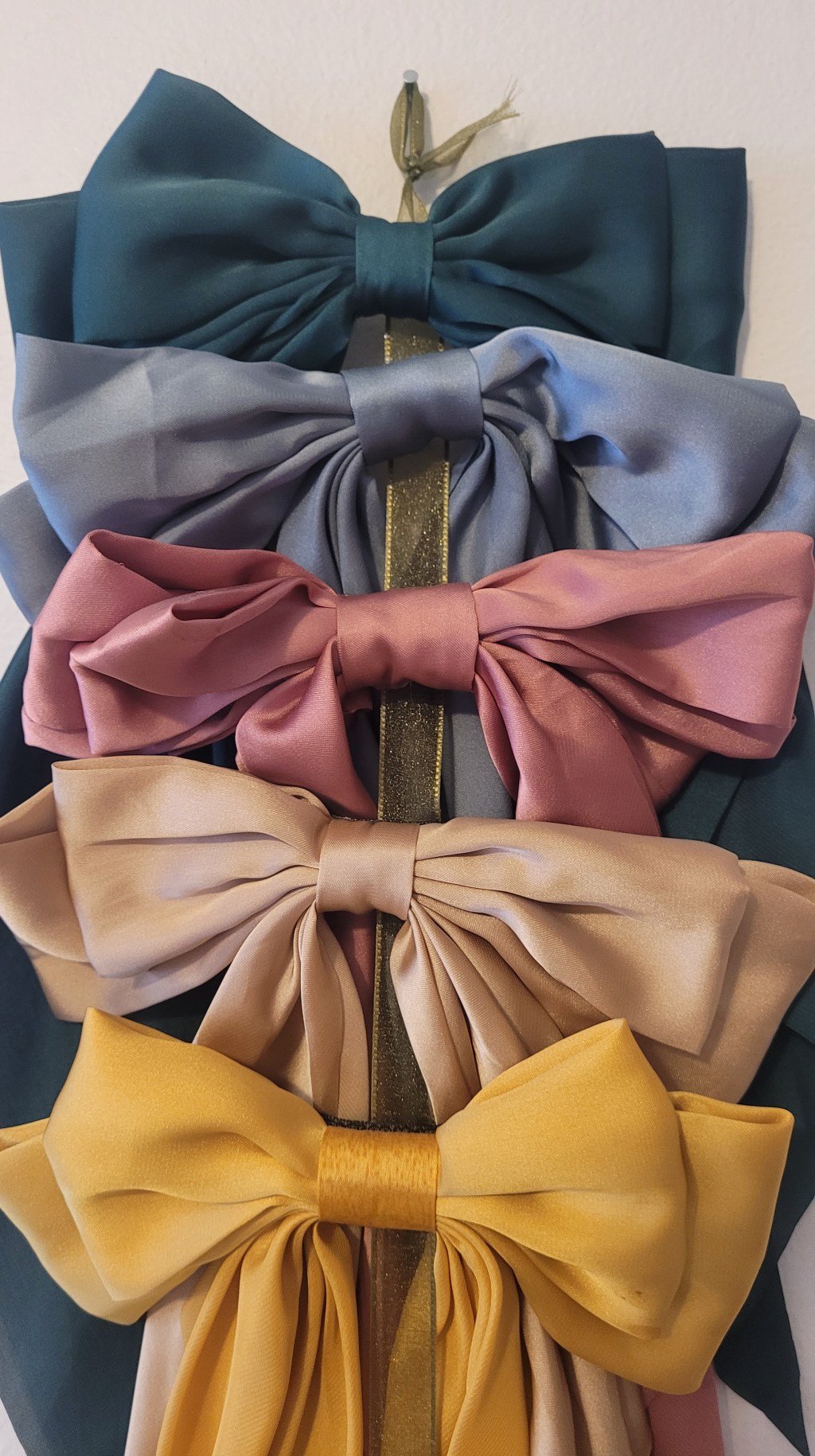
There’s a common saying in the vintage fashion community: ‘Vintage styles, not vintage values.” The idea is that even as we take the aesthetics of certain time periods and certain groups we aren’t taking the worldview and the bigotry that they may have engaged in. It seemed so obvious I didn’t think about it further. But the explosion of trad wife content in the last few months has made me rethink how I engage in aesthetics and what values they convey.
There’s the obvious caveat that what you do is a much more potent indicator of your values. However, being social creatures means that almost everything about our lives is some form of communication. The content we engage in is a communication of what we value. The way we style ourselves (in dress, personal hygiene, and grooming) says a lot about how we want other people to perceive us. Oftentimes, there is also this implication that we present ourselves in a way that is most authentic to us.
Somehow with vintage fashions, we see the delineation super clearly. We don’t anticipate that someone who dresses in Regency fashion lives their life with Regency values. But when we contemporize the fashion it gets stickier, specifically, when we look at the popularity of hyperfeminine aesthetics and trad wife content over the past few years. It can be difficult when you see someone engaging in traditional hallmarks of femininity; are they just cottage-core or coquette because they like the aesthetics or are they saying something deeper about their views on gender roles?
Now we get into the feminism of it all. Can you engage in these hallmarks of traditional femininity without also participating in their links to oppression? Does liberation require that we entirely reject the constructs of femininity or can we choose to engage when it suits us as individuals? A trad wife harms others when she extolls the principle that women should only be mothers and homemakers, but when a woman becomes the stay-at-home parent because the family can’t afford childcare the only harm done is to the mother from the capitalist system.
So now we look at the intersectionality of it. Most trad wives we see on social media extolling these harmful gender roles are already wealthy (and ironically have their own jobs and income from social media) so it seems like they could choose (and in some ways are) to have some level of financial independence and equality with their spouses. But if they come from a religion where these gender roles are enforced, does their wealth erase the victimization of indoctrination? Does the societal harm (and personal harm to those who aren’t financially privileged) perpetuated by these roles negate our (societal and personal) values of religious freedom?
I wish I had answers to any of these macro-level questions. I barely have answers for the micro-level ones. I don’t know what to think about my relationship with feminity in light of these reflections. I know that I feel a euphoria when I engage in hyper-feminine style. But is that because that is authentic to me or is that because society at large has told me women are treated better when they dress a certain way? Can I extricate the two from each other?
More importantly, what is my style saying to others about me? Where does my responsibility for communicating my values lie? If I dress hyper-feminine and someone makes assumptions that I hold harmful gender stereotypes is that my doing because of my dress? Is that incorrect assumption something I should dispel? What harm is done if someone walks away with the impression that at least one person around them believes in harmful gender stereotypes? Is the harm mitigated if I’m the only one; is it amplified if I am one of many? Does my responsibility change based on the people around me? If it does should it? Should I presume responsibility for conveying my values accurately every day based on my style?
The personal and the societal are inextricably linked, and yet they are two very different things. Where does my societal responsibility end and my personal choice begin? When is my life mine and when does it become part of something larger? If my life is part of something larger is it ever mine? All of these questions are so important and yet I can’t help but feel they are predicated on the idea that each of us understands the larger picture, that we aren’t influenced by our own perspectives, and that we can always see the long-term impact of each choice. The reality is that we are all imperfect individuals trying to choose the next right step. This, naturally, does not free us from our responsibility to those around us and the society that we both shape and are shaped by. But it does mean that we do not carry that burden alone. With this perspective we are allowed to take breaks from that larger view to focus on what is within our control, just this next step.
I’m hoping that this can be a space for us to collaborate on what next steps feel right for each of us.

 Making the Internet My Accountability Partner
Leave a comment